Is Ledger Wallet Safe? Fees, Comparisons & Honest Pros/Cons
Evaluating whether a ledger wallet safe enough for your cryptocurrency requires examining security design, costs, and real-world factors.
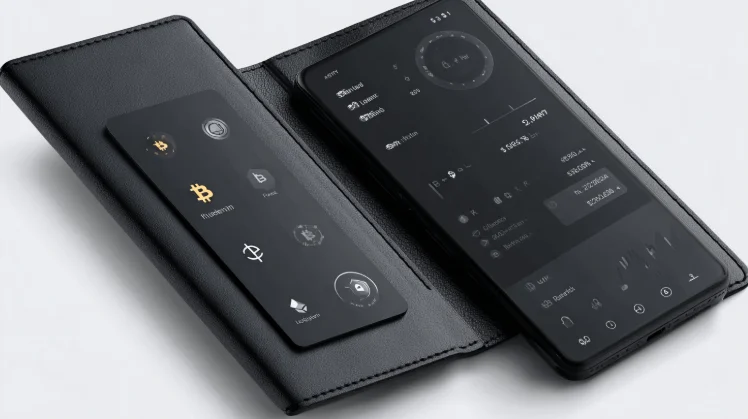
Evaluating whether a ledger wallet safe enough for your cryptocurrency requires examining security design, costs, and real-world factors. This honest assessment explains ledger wallet fees comprehensively, provides ledger wallet comparison with alternatives, and delivers balanced ledger wallet pros cons analysis. Whether considering Ledger or already using it, find the objective details you need. Compare with our feature comparison, or learn about secure setup procedures.
Is Ledger Wallet Safe? Security Analysis
Secure Element Technology
The foundation of ledger wallet safe operation lies in the certified secure element chip inside every Ledger hardware device. These ST33 series processors hold CC EAL5+ or EAL6+ certification from independent testing laboratories.
Secure element protections include:
- Physical tamper resistance with detection mechanisms that wipe data if attackers attempt direct chip access
- Side-channel attack prevention blocking secret extraction through power analysis or electromagnetic monitoring
- Fault injection countermeasures defeating hardware manipulation attempts
- Certified random number generation ensuring unpredictable key creation
- Isolated cryptographic operations preventing external access to sensitive processes
- Hardware-enforced memory protection securing stored credentials
This architecture ensures private keys generate inside the secure element during setup and never leave the chip. Even Ledger cannot access your keys—they exist only on your physical hardware.
Track Record and Reputation
Is ledger wallet safe based on historical performance? Evidence suggests yes.
Ledger has operated since 2014 with no successful remote attacks against secure element technology. Over 6 million devices shipped protecting more than $20 billion in cryptocurrency. The company responds to security research transparently, implementing improvements when vulnerabilities are discovered.
Industry recognition includes partnerships with major exchanges and protocols, enterprise solutions for institutional custody, and position as the leading consumer hardware wallet provider.
Security Concerns Worth Noting
Honest ledger wallet safe assessment includes acknowledging concerns.
The 2020 data breach exposed customer email addresses and physical addresses (not funds or private keys). While no cryptocurrency was stolen through Ledger's systems, affected customers faced phishing attempts. Ledger has since improved data security measures.
Closed-source secure element firmware means independent researchers cannot fully audit the implementation. The company argues secure element architecture provides security guarantees regardless, but some users prefer fully open-source alternatives like Trezor.
Supply chain security requires purchasing from official sources. Tampered or counterfeit devices from third-party sellers have led to cryptocurrency theft.
Ledger Wallet Fees Breakdown
Blockchain Network Fees
Understanding ledger wallet fees requires distinguishing between fee types.
Network fees (paid to blockchain miners/validators) are NOT Ledger fees. When sending Bitcoin or Ethereum, network fees go to the blockchain network regardless of which wallet you use. Ledger Wallet simply facilitates the transaction.
Ledger itself charges nothing for basic send/receive operations, portfolio viewing and management, account creation and address generation, firmware updates and app installation, or device connectivity and pairing.
Service Fees
Integrated services within Ledger Wallet have their own ledger wallet fees.
Crypto purchase fees include partner fees (MoonPay, Coinbase Pay, etc.) typically 2-5% depending on payment method and provider, plus network fees for transferring purchased crypto to your wallet.
Swap fees include DEX/aggregator spread built into exchange rates, network fees for the swap transaction, and no separate Ledger fee.
Crypto sale fees include partner fees similar to buying and bank transfer fees where applicable.
Staking involves no Ledger fee, though validators/providers take a percentage of rewards (varies by network, typically 5-15% of earnings).
Hidden Costs?
Are there hidden ledger wallet fees? Largely no.
The wallet application is completely free. You pay for the hardware device once ($79-$399 depending on model). Ongoing costs come from blockchain network fees (same for all wallets) and optional integrated services (buying, swapping, staking through partners).
The main "hidden" cost is the hardware device itself. Software-only wallets are free but have different security tradeoffs.
Ledger Wallet Fees Summary Table
| Action | Ledger Fee | Third-Party Fee | Network Fee | Total Cost |
|---|---|---|---|---|
| Send Crypto | $0 | None | Variable (BTC: $1-20, ETH: $1-50) | Network fee only |
| Receive Crypto | $0 | None | None | Free |
| Portfolio View | $0 | None | None | Free |
| Buy Crypto | $0 | 2-5% (partner) | Variable | Partner + network |
| Sell Crypto | $0 | 2-5% (partner) | Variable | Partner + network |
| Swap Crypto | $0 | Spread in rate | Variable | Spread + network |
| Stake Crypto | $0 | 5-15% of rewards | Variable | Validator cut + network |
| Firmware Update | $0 | None | None | Free |
| App Installation | $0 | None | None | Free |
Network fees vary based on blockchain congestion. Third-party fees vary by provider and region.
Ledger Wallet Comparison With Alternatives
Ledger vs Trezor
The primary ledger wallet comparison is against Trezor.
Ledger advantages include:
- Bluetooth connectivity (Trezor has none)
- iOS support (Trezor cannot connect to iPhone)
- ANSSI government certification
- More premium device options (Stax, Flex)
Trezor advantages include:
- Fully open-source firmware
- Shamir Backup for split recovery
- On-device passphrase entry
- Lower flagship pricing (Model T at $179 vs Nano X at $149, though Trezor Safe 5 at $169)
Security: Both now offer CC EAL6+ certified secure elements in current models. Security is functionally equivalent for certified devices.
Ledger vs Software Wallets
Software wallets (MetaMask, Trust Wallet, etc.) are free but store private keys on internet-connected devices.
Ledger advantages include:
- Private keys never on phone or computer
- Protection from malware and remote attacks
- Physical confirmation for transactions
- Certified secure element protection
Software wallet advantages include:
- No cost (zero hardware investment)
- Convenience (always available on device)
- Faster for frequent small transactions
For significant holdings, hardware wallet security is essential. Software wallets work for small amounts used actively.
Ledger vs Exchange Custody
Keeping crypto on exchanges (Coinbase, Kraken, etc.) means trusting third parties.
Ledger advantages include:
- Self-custody (you control keys)
- No counterparty risk
- Protection from exchange hacks or failures (FTX)
- No account freezes or withdrawal limits
Exchange advantages include:
- Convenience (no hardware management)
- Insured custody in some cases
- Easier fiat on/off ramps
- No device to lose
"Not your keys, not your coins" summarizes why self-custody matters for significant holdings.
Ledger Wallet Pros Cons: Honest Assessment
Ledger wallet pros include:
- Industry-leading security with CC EAL5+/EAL6+ certified secure elements protecting all models.
- Extensive cryptocurrency support covering 5,500+ coins and tokens across multiple networks.
- Integrated services for buying, selling, swapping, and staking within single application.
- Bluetooth and iOS support unlike competitors enabling mobile flexibility.
- Proven track record with 6+ million devices shipped and decade of operation.
- Regular updates with ongoing development and security improvements.
- Professional ecosystem with Ledger Live providing complete management capabilities.
Ledger wallet cons include:
- Hardware cost with devices ranging $79-$399 representing initial investment.
- Closed-source firmware for secure element cannot be independently audited by researchers.
- Past data breach (2020 customer data—not funds—was exposed) raising privacy concerns.
- Learning curve as hardware wallets require education for proper usage.
- USB/Bluetooth required for transactions needing device connection each time.
- Limited customer support with some reports of slow response times during peak periods.
Who Should Use Ledger Wallet
Ledger is ideal for:
- Long-term holders storing significant cryptocurrency amounts seeking maximum protection.
- Security-conscious users wanting certified hardware safeguarding their investments.
- Multi-asset holders needing support for diverse portfolios spanning many networks.
- Mobile users requiring Bluetooth and iOS support for on-the-go management.
- Staking participants wanting rewards while maintaining hardware security.
- Self-custody advocates avoiding exchange exposure and counterparty risks.
Consider alternatives if:
- You hold only small amounts (software wallet may suffice for minimal holdings).
- You require fully open-source solutions (consider Trezor Safe 3 or Safe 5).
- Budget is extremely limited (software wallets are free though less secure).
- You're uncomfortable with hardware management and prefer simplicity.
For most cryptocurrency holders with meaningful investments, Ledger offers the best balance of security, features, and usability.
Frequently Asked Questions
For more information, see our Ledger Wallet overview or features page.